Nanopuncture · Stroke Foundation & Concussion Strategies · Melbourne 2026
Treat the Neurological Cases Other Acupuncturists Refer Away
Master neurological Acupuncture for stroke rehabilitation and traumatic brain injury treatment — with Dr Clayton Shiu, PhD, across 3 intensive days in Melbourne.
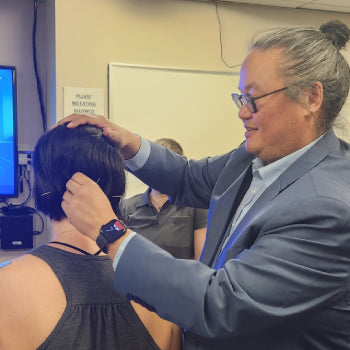
You Became an Acupuncturist to Make a Real Difference.
Complex Neurological Cases Can Feel Like a Different World.
You have the training, the needles, and the clinical intent. But when a complex stroke patient presents with minimal progress, or a post-concussion case arrives with layered neurological symptoms, the gap between what you know and what you can confidently do feels significant. You are not alone — and this isn't a reflection of your skill.
Neurological Cases Require a Specialised Framework
Standard Acupuncture training rarely covers the depth of neurological assessment and point selection needed to address stroke and TBI presentations with consistency and confidence.
Needle Technique Is Not Enough Without Neurological Understanding
Knowing which points to use is only part of the picture. Knowing how to stimulate, sequence, and adapt treatment in response to neurological findings is what creates measurable clinical progress.
The Concussion Gap Is Growing Faster Than the Training Available
Post-concussion presentations — from athletes to elderly falls patients — are increasingly common, yet most Acupuncturists have had little formal training in functional neurological assessment for TBI.
Nanopuncture is designed to close this gap.
A Neurological Acupuncture System That Bridges
3,000 Years of Clinical Wisdom With Modern Neuroscience
Nanopuncture is Dr Clayton Shiu's structured, evidence-informed approach to neurological treatment — developed over 25 years of clinical practice and refined through thousands of complex neurological cases. This is not another scalp Acupuncture technique. This is a complete system.
Neural Flush Technique
A structured protocol designed to systematically address neurological pathway disruption. Rather than treating symptoms in isolation, the Neural Flush works as a comprehensive reset — targeting the central nervous system through precise point selection and quantitative needle manipulation. Unlike passive insertion techniques, every needle is actively stimulated at specific frequencies and timing intervals throughout the treatment.
Augmented Brain Blood Flow Protocol
A point combination and sequencing strategy aimed at supporting healthy cerebral and spinal circulation. Informed by classical neurological Acupuncture research and Dr Shiu's own clinical refinement, this protocol systematically addresses the vascular and circulatory dimensions of neurological rehabilitation — a component often overlooked in standard post-stroke care.
What separates Nanopuncture from other approaches is the quantitative precision of the technique — not just where you needle, but how you needle, for how long, and why.
Meet Dr Clayton Shiu
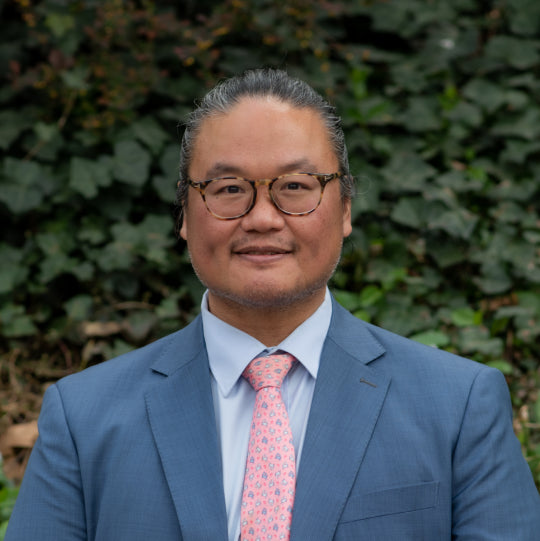
Dr Clayton Shiu completed his PhD at Tianjin University of Traditional Chinese Medicine under the direct guidance of Dr Shi Xue Min — the pioneer of the Xing Nao Kai Qiao (XNKQ) neurological Acupuncture system and one of the most celebrated figures in modern Chinese medicine. This immersion in XNKQ methodology at its source forms the clinical foundation that Nanopuncture is built upon.
After returning to America, Dr Shiu integrated the teachings and techniques of XNKQ with his 20 years of Sports medicine practice to create the Nanopuncture system. The result is a framework unlike anything else in the field — one that draws equally from classical Chinese neurological medicine and the performance and rehabilitation demands of elite sports care.
Nanopuncture is a fusion of functional neurology, neurological examination, QEEG brain scans, and other modern technologies — designed to assist in maintaining the brain and nervous system's longevity. It is not a single technique. It is a complete clinical system, refined across decades of practice and thousands of complex neurological cases.
- PhD in Acupuncture and Moxibustion, Tianjin University of Traditional Chinese Medicine
- Doctoral training under Dr Shi Xue Min — pioneer of the XNKQ neurological Acupuncture system
- 20 years of Sports medicine practice integrated with XNKQ methodology
- Clinical application of functional neurology, neurological examination, and QEEG brain scans
- Founding developer of the Nanopuncture neurological Acupuncture system
The Clinical Research That Informs Nanopuncture
Nanopuncture draws on decades of published XNKQ neurological Acupuncture research — one of the most rigorously studied neurological Acupuncture systems in Chinese medicine.
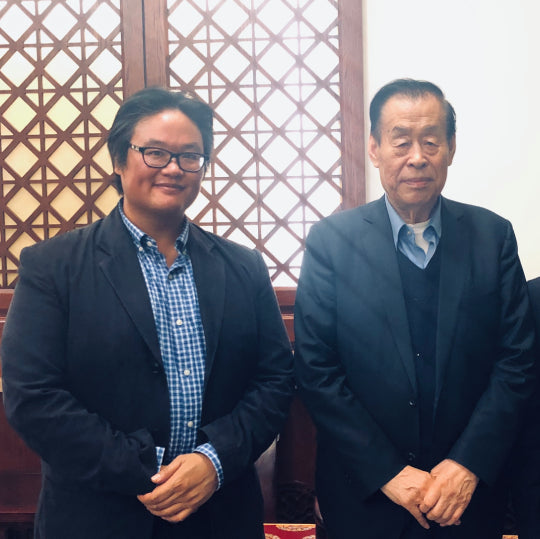
Dr Shi Xue Min — Pioneer of Neurological Acupuncture Research
Dr Shi Xue Min is one of the most celebrated figures in modern Chinese medicine. He created the Xing Nao Kai Qiao (XNKQ) stroke rehabilitation system — a neurological methodology developed through decades of clinical and hospital-based research at Tianjin University of TCM and the Tianjin First Teaching Hospital.
XNKQ has been studied extensively across thousands of clinical cases and represents a landmark contribution to the evidence base for neurological Acupuncture. The system's point prescriptions, needle manipulation techniques, and neurological framework form the foundational research that Dr Shiu's Nanopuncture system is built upon — translated, refined, and structured for clinical practice in the Western context.
In this training, you will learn the XNKQ point prescriptions and foundational methodology as taught by Dr Shiu, integrated with his own clinical developments and neuroanatomical framework.
What You Will Be Equipped to Do After This Training
By the end of three days, you will have the framework, the technique, and the clinical reasoning to approach neurological presentations with greater confidence and structure.
Apply the XNKQ foundational point prescriptions for stroke rehabilitation — including precise needle technique, stimulation sequences, and treatment timing
Understand the neurological anatomy behind XNKQ point selection — including why Nei Guan (PC-6), San Yin Jiao (SP-6) and Ren Zhong (DU-26) produce the clinical effects they do
Execute quantitative needle manipulation techniques — Sparrow Pecking, Lifting and Thrusting, Phoenix Flapping Wings — with the precision required for neurological outcomes
Structure complete treatment plans for upper and lower limb spasticity, gait disorders, aphasia, and post-stroke depression using the Nanopuncture framework
Conduct a functional neurological assessment for post-concussion and TBI presentations — including Dr Shiu's skull palpation method and lobar assessment approach
Apply specialised Nanopuncture protocols for concussion recovery and integrate complementary tools including photobiomodulation and QEEG where appropriate
Position your practice as a referral destination for complex neurological cases — with the clinical language and documented methodology to communicate your approach to GPs, neurologists, and rehabilitation specialists
How the Three Days Are Structured
This training moves through a deliberate arc: understand the system → observe it applied in live clinical settings → practice the technique under direct supervision → refine based on personalised coaching. Each day builds on the last.
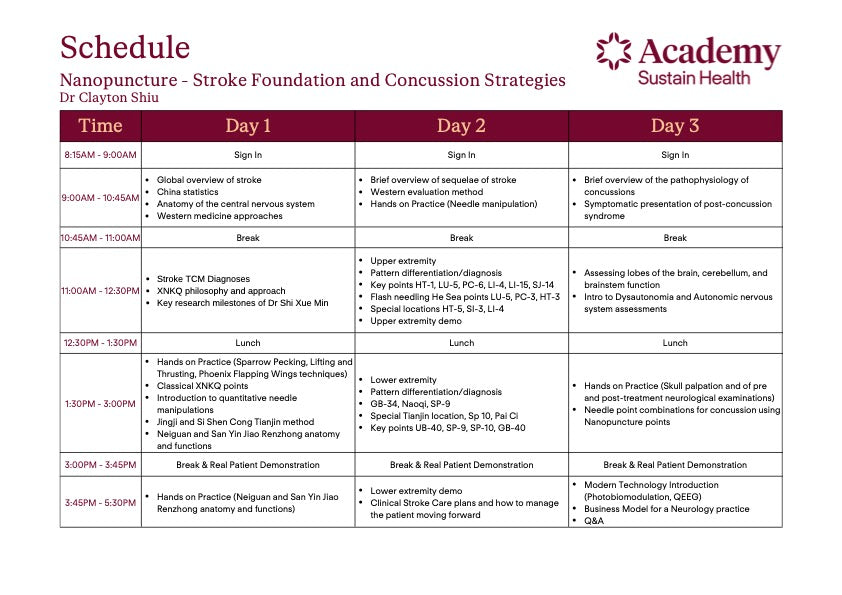
XNKQ Foundation & Core Point Prescriptions
- Global overview of stroke: China statistics, anatomy of the central nervous system
- Western medicine approaches to stroke rehabilitation and where Acupuncture fits
- Stroke TCM diagnosis framework
- XNKQ philosophy, development history, and key research milestones
- Classical XNKQ point prescriptions: Jingji, Si Shen Cong (Tianjin method)
- Nei Guan (PC-6) and San Yin Jiao (SP-6) anatomy, neurological functions, and clinical rationale
- Ren Zhong (DU-26) point anatomy and XNKQ application
- Introduction to quantitative needle manipulation
- Hands-on practice: Sparrow Pecking, Lifting & Thrusting, Phoenix Flapping Wings
- Ample supervised partner practice with direct coaching
Spasticity Protocols & Live Clinical Demonstrations
- Upper limb spasticity: point selection, sequencing, and needle technique
- Lower limb spasticity and foot drop protocols
- Bidirectional nerve theory — the neurological basis behind classical meridian directionality
- Neural Flush Technique: systematic application and clinical reasoning
- Augmented Brain Blood Flow Protocol: structure, sequencing, and rationale
- Live clinical demonstrations: Dr Shiu treats real patients in real time
- Clinical observation: assessment approach, pattern identification, treatment decisions
- Supervised hands-on practice with direct feedback
- Q&A — complex case discussion
Concussion & Traumatic Brain Injury Strategies
- Understanding concussion and post-concussion syndrome: mechanisms and presentations
- Functional neurological examination: assessing each cerebral lobe post-concussion
- Dr Shiu's skull palpation method for detecting cranial dysfunction
- Meridian-based brain mapping: matching affected regions to Acupuncture points
- Specialised Nanopuncture point combinations for concussion recovery
- Integrating photobiomodulation and QEEG into neurological Acupuncture practice
- Oculomotor deficits, vestibular dysfunction, and cervicogenic headache protocols
- Afternoon session: treatment application under supervision
- Practice positioning: building a neurological Acupuncture specialty in your area
- Q&A and course completion
Language: English · Prerequisites: None · 9am – 5:30pm daily (AEST) · Approved by AACMA, ACUNZ
Reserve Your Place
Late bird pricing now applies — seats are allocated on a first-come, first-served basis.
Late Bird AUD $4,299 · save AUD $191
2.5% off the Late Bird price · You save AUD $298 off the full price
Pay in full by credit card. Securely processed through Stripe.
- ✓ 3 days of intensive clinical training
- ✓ 21 CPD points (approved by AACMA & ACUNZ)
- ✓ Live patient demonstrations
- ✓ Hands-on supervised practice sessions
- ✓ Nanopuncture training notes
- ✓ Morning and afternoon tea included
Late Bird AUD $4,299 · save AUD $191
5% off the Late Bird price · You save AUD $406 off the full price
Pay in full by bank transfer. Your seat is held for 72 hours while your transfer clears.
- ✓ 3 days of intensive clinical training
- ✓ 21 CPD points (approved by AACMA & ACUNZ)
- ✓ Live patient demonstrations
- ✓ Hands-on supervised practice sessions
- ✓ Nanopuncture training notes
- ✓ Morning and afternoon tea included
All prices in AUD. If this seminar is cancelled due to insufficient numbers, a full refund is offered. View Terms, Conditions & Refund Policy
Venue
Adina Apartment Hotel (4.5★)
189 Queen Street, Melbourne VIC 3000
Reward & Support Offers
Student & New Graduate Support Offer
In training, or within your first year of clinical practice? We support new Acupuncturists with a registration discount. Verification required.
Apply for the student rate →Common Questions
Nanopuncture is also a complete neurological system that includes precise quantitative needle manipulation: specific stimulation frequencies, intensities, and timing applied throughout the treatment. The body point prescriptions, needle technique, and neurological reasoning framework are all distinct from other scalp Acupuncture systems.
Neurological Acupuncture Is a Specialty Worth Building.
The Acupuncturists who treat complex neurological cases with confidence didn't get there by chance. They made a deliberate investment in the training, the technique, and the clinical framework that most seminars don't provide.
This is Dr Shiu's first time bringing Nanopuncture training to Melbourne.
Reserve Your Seat →Seats are limited and allocated in order of enrolment.